
-

-
 Webinars only : $ 750 USD
-
Webinar & Hands-on: $ 4000 USD
-
Want to Sign Up Later for the In-Person? $ 3250 USD (Webinar is a Pre-requisite)


Age-appropriate myofunctional, orthopedic, dentoalveolar, and skeletal interventions to address transverse, sagittal, and volumetric airway constraints.
Functional balance of the oral, maxillofacial, neuromuscular, and airway systems, including occlusion, tongue posture, nasal breathing, and myofunctional coordination.
Optimization of airway performance, sleep quality, facial harmony, and long-term stability through interdisciplinary care, including allergy management, ENT procedures, and surgical intervention when indicated.
Longitudinal guidance of craniofacial growth and airway development across infancy, childhood, and adolescence, informed by biology, habit modification, and developmental timing.
Session 6: Immersive Experience in Hong Kong
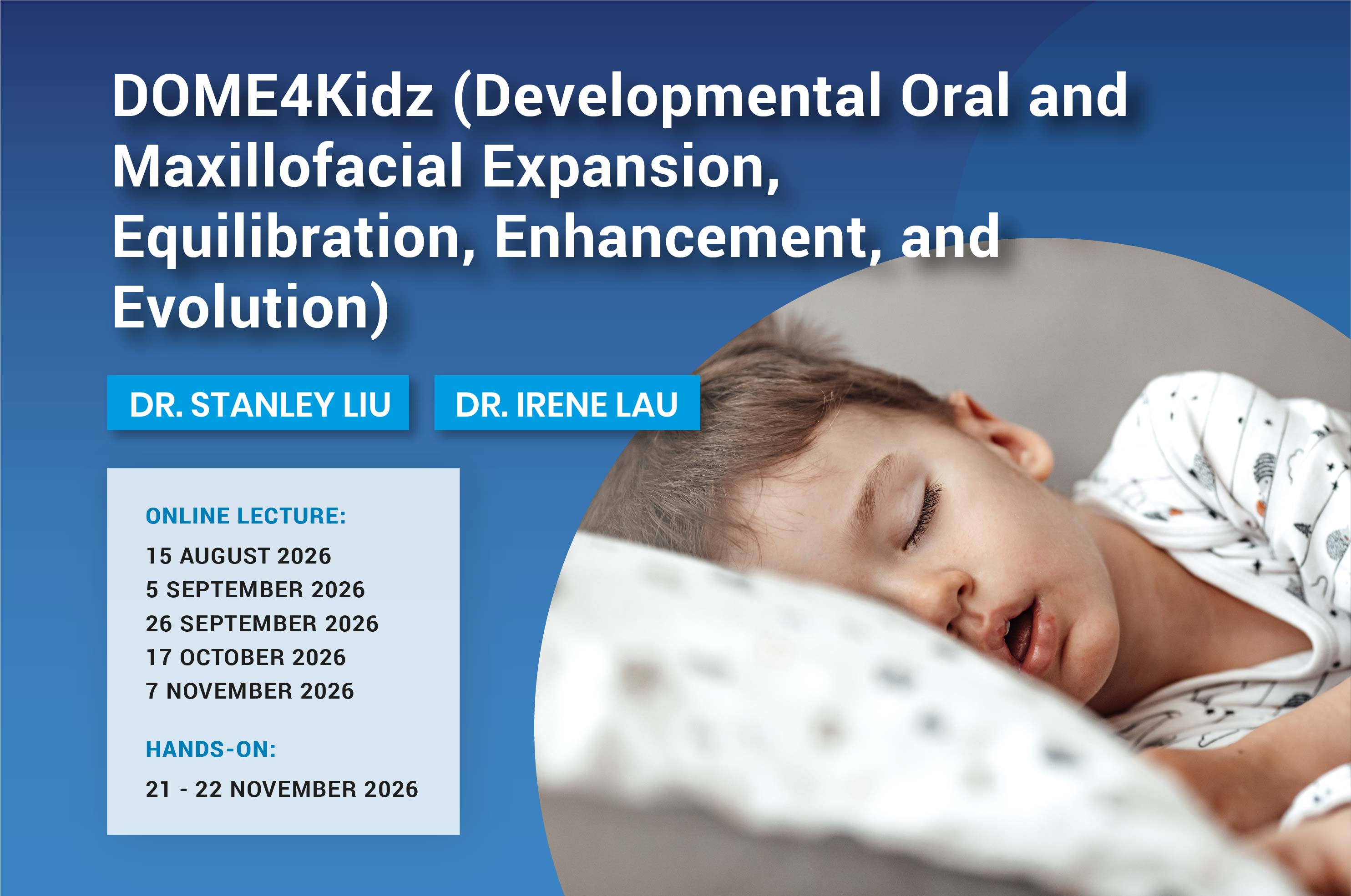
- August 15, 2026
- September 5, 2026
- September 26, 2026
- October 17, 2026
- November 7, 2026
- November 21-22, 2026
- Hong Kong
(T.O.P Dental by family smile)
1901-1906 T.O.P, 700 Nathan Road, Mongkok, Kowloon
Course Overview
Delivered through six interactive online modules followed by an immersive, hands-on in-person experience in Hong Kong, the program equips participants to recognize, assess, and manage sleep-related breathing disorders from infancy through adolescence.
Grounded in developmental biology, airway science, and multidisciplinary clinical practice, the course empowers clinicians to identify early airway and craniofacial risk factors, apply age-appropriate diagnostic reasoning, coordinate interdisciplinary care, and implement timely, effective interventions to support healthy breathing, sleep, and long-term craniofacial development.
Learning Objectives
Upon completion of this course, participants will be able to:
- Understand the foundational concepts and pathophysiology of pediatric sleep-disordered breathing (SDB).
- Define the role of dental and craniofacial healthcare providers in the early recognition, risk stratification, and management of pediatric SDB.
- Comprehend airway anatomy and craniofacial growth and development from infancy through adolescence.
- Apply age-specific diagnostic frameworks and treatment strategies across key developmental stages.
- Effectively utilize functional appliances, expansion techniques, clear aligner therapy, and myofunctional interventions in the management of pediatric SDB.
- Diagnose and manage tongue-tie and lip-tie within an interdisciplinary, growth-oriented care model.
- Implement a multidisciplinary treatment approach integrating allergy management, adenotonsillar surgery, DOME 4 Kidz-guided care, and orthognathic surgery when indicated to optimize long-term airway, sleep, and craniofacial outcomes.
Sessions 1–5 Online Lecture Series (Live via Zoom)
- Overview of pediatric sleep-disordered breathing (SDB): scope, impact, and clinical relevance
- The role of dental and craniofacial providers in early identification and prevention
- Why a multidisciplinary, growth-guided approach is essential for optimal long-term outcomes
Session 2 – Growth and Development
- Craniofacial and airway development from infancy through adolescence
- Oral, facial, and airway functional milestones
- Early clinical indicators and warning signs of pediatric SDB
Session 3 – Diagnosis and Early Intervention
- Step-by-step airway assessment and diagnostic workup across developmental stages
- ENT and oral and maxillofacial surgery perspectives on nasal obstruction, tonsils, adenoids, and maxillary development
- Introduction to DOME 4 Kidz principles in early treatment planning
Session 4 – Functional and Orthopedic Interventions
- Management of pediatric SDB using functional appliances, expansion strategies, myofunctional therapy, and clear aligner systems
- Evidence-based indications for tongue-tie and lip-tie diagnosis and treatment
- Clinical decision-making on the timing and extent of expansion in the primary and mixed dentitions
Session 5 – Case Integration and Interdisciplinary Collaboration
- Comprehensive case presentations and guided clinical decision-making
- Integrating orthodontic, surgical, ENT, and myofunctional perspectives
- Building collaborative care pathways to achieve durable clinical outcomes
Possible Bonus Session – Pediatric Airway Imaging and Emerging Technologies
- Imaging protocols for pediatric airway evaluation
- Digital workflows, treatment planning, and emerging diagnostic technologies
- Future directions in pediatric sleep-breathing care
Session 6 - Immersive In-Person Experience (Hong Kong)
- Hands-on training in functional appliances and expansion protocols
- Clinical workflows for appliance delivery, adjustment, and longitudinal follow-up
- Live demonstration of tongue-tie and lip-tie release, including post-treatment protocols
- Integration of surgical, orthodontic, and myofunctional therapies in real-world clinical settings
- Collaborative case-based workshops with experts in ENT, oral and maxillofacial surgery, and sleep medicine
- Recognize sleep-breathing-related growth patterns early in life
- Establish structured diagnostic and referral workflows
- Implement timely, evidence-based intervention strategies
- Collaborate effectively with medical and allied health professionals
- Integrate pediatric sleep and breathing assessment into daily clinical practice


© hellosmile HK 2026. All right reserved.

